

Finding time to exercise can feel almost impossible when your day is packed with work, family responsibilities, errands, and everything else life throws at you. The good news is that you do not always need a full hour at the gym to get your body moving.
A 10-minute home workout can be a practical way to add movement to your day. You can do it in your bedroom, living room, balcony, or even beside your work desk, with little or no equipment.
Short workouts are also easy to fit into a busy schedule. Current physical activity guidance emphasizes that activity can be accumulated in smaller chunks throughout the week, and that some movement is better than none.
If you are looking for a simple way to stay active at home, starting with just 10 minutes can be a realistic first step.
Why Try a 10-Minute Workout?
The biggest advantage of a short workout is simple: it is easier to fit into your day.
You might not have 60 minutes available, but you may have 10 minutes before work, during a lunch break, or in the evening.
A quick workout can help you:
- Break up long periods of sitting
- Get your heart rate up
- Move different muscle groups
- Build an exercise habit
- Add more physical activity to your week
- Feel more energized after spending hours at a desk
Short sessions can also be combined throughout the day. For example, you could take a 10-minute walk in the morning, complete a short strength routine in the afternoon, and take another walk after dinner.
The goal is not to make every workout exhausting. The goal is to make movement a regular part of your routine.
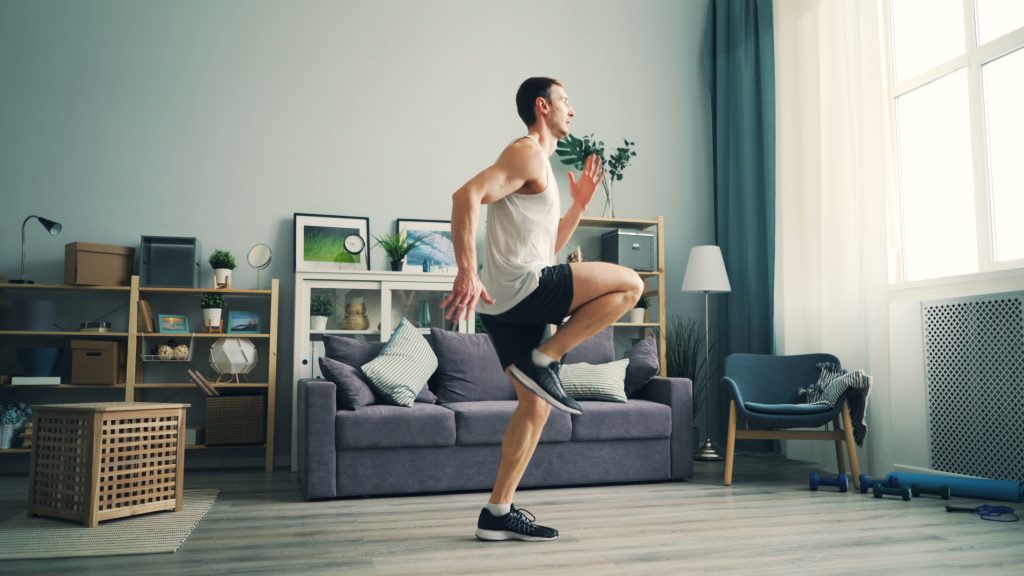
Your Simple 10-Minute Full-Body Home Workout
You do not need expensive equipment for this routine. A little floor space and a comfortable pair of shoes are enough.
Try the following sequence:
1. March in Place: 1 Minute
Start with an easy march and gradually increase your pace.
Keep your shoulders relaxed and swing your arms naturally. If you feel comfortable, bring your knees slightly higher as you warm up.
This is a simple way to get your body moving before progressing to more demanding exercises.
2. Bodyweight Squats: 1 Minute
Stand with your feet approximately shoulder-width apart.
Push your hips backward and bend your knees as though you are sitting into a chair. Keep your chest lifted, then push through your feet to return to standing.
If regular squats feel difficult, reduce how far you squat.
3. Wall Push-Ups: 1 Minute
Stand facing a wall and place your hands against it around shoulder height.
Slowly bend your elbows to bring your chest toward the wall, then push yourself back.
Wall push-ups are a useful beginner-friendly alternative to floor push-ups and can be adjusted based on your comfort level.
4. Alternating Reverse Lunges: 1 Minute
Stand upright and step one foot backward.
Lower yourself into a comfortable lunge position, return to standing, and repeat on the opposite side.
If lunges are uncomfortable, you can hold onto a sturdy chair for additional support or replace them with another round of marching.
5. Glute Bridges: 1 Minute
Lie on your back with your knees bent and feet flat on the floor.
Press through your feet and gently lift your hips. Pause briefly at the top, then lower your hips with control.
Keep the movement comfortable rather than trying to lift as high as possible.
6. Standing Knee-to-Elbow: 1 Minute
Stand tall and bring your right knee toward your left elbow. Return to the starting position and switch sides.
Keep the movement controlled. You can increase the pace if it feels comfortable.
7. Step Touches: 1 Minute
Step to the right, bring your other foot toward it, then step to the left.
Continue alternating while gently moving your arms.
This is an easy way to keep moving without requiring much space.
8. Standing Calf Raises: 1 Minute
Stand near a wall or sturdy surface if you need support.
Slowly raise your heels until you are standing on your toes, then lower them back down.
Repeat at a steady pace.
9. Fast March or Low-Impact Cardio: 1 Minute
Increase your marching pace or add gentle side steps.
The idea is to get your body working a little harder without forcing yourself into high-impact movements.
10. Easy Cooldown: 1 Minute
Slow your movements and take relaxed breaths.
Walk slowly around the room and gently loosen your shoulders, arms, and legs.
You have just completed a 10-minute workout.
How to Make Your 10 Minutes More Effective
A short workout does not have to become complicated. The key is choosing movements that fit your fitness level and doing them consistently.
Here are a few ways to make your routine easier to maintain:
Choose a fixed time.
Doing your workout at the same time each day can make it easier to turn exercise into a habit.
Keep it simple.
You do not need a complicated routine with dozens of exercises. A few basic movements can give you a useful starting point.
Increase gradually.
If 10 minutes feels comfortable after a few weeks, you can add another short session or gradually increase the duration or difficulty.
Use your surroundings.
A wall, sturdy chair, stairs, or a small open area can give you plenty of options for a home workout.
Listen to your body.
Exercise should challenge you, but pain is a reason to stop and reassess the movement.
For people who are new to exercise, health guidance recommends starting gradually and increasing activity over time. People with chronic health conditions or specific health concerns should discuss suitable activities with a healthcare professional.
Can 10 Minutes Really Count?
Yes, but it helps to think about the bigger picture.
A 10-minute workout is not necessarily a replacement for all the physical activity you need. Instead, it can be one piece of your overall weekly routine.
For general health, adults are advised to get at least 150 minutes of moderate-intensity aerobic activity each week, along with muscle-strengthening activities on at least two days. That activity can be spread across the week rather than completed in one long session.
That means a 10-minute workout can be a useful starting point, especially when your alternative is sitting still because you feel you do not have enough time.
You could also combine your workout with everyday movement such as walking, taking the stairs, doing household chores, or going for a short walk after dinner.

A 10-Minute Routine for Different Goals
You can also adjust your routine depending on what you want from your workout.
For beginners
Focus on:
- Marching
- Wall push-ups
- Chair-supported squats
- Step touches
- Gentle stretching
Keep the pace comfortable and focus on learning the movements.
For more cardio
Try:
- Fast marching
- Step touches
- Low-impact jumping jacks
- Mountain climbers at a comfortable pace
- Dancing
Moderate-intensity activity generally means your breathing and heart rate increase while you can still carry on a conversation.
For strength
Focus more on:
- Squats
- Lunges
- Wall or floor push-ups
- Glute bridges
- Calf raises
You can gradually increase repetitions or add resistance when the routine becomes easier.
How to Fit 10-Minute Workouts Into a Busy Day
The hardest part is often not the workout itself. It is finding a time that works.
Try attaching your workout to something you already do.
For example:
Morning: 10 minutes before getting ready for work
Lunch break: 10 minutes of walking or simple exercises
After work: 10-minute strength routine before changing into comfortable clothes
Evening: 10-minute walk after dinner
You can even split movement into smaller periods. A short walk between tasks, a few exercises during a break, or choosing the stairs instead of the elevator can gradually add more activity to your day.
The Real Secret Is Consistency
There will always be days when you cannot fit in a long workout.
That does not mean the entire day has to become inactive.
Ten minutes is short enough to feel manageable but long enough to create a meaningful opportunity to move. Once the habit becomes easier, you can build from there.
Instead of thinking, “I don’t have time to work out,” try asking yourself:
“What can I do for the next 10 minutes?”
Sometimes, that small change in mindset is enough to get started.
Final Thoughts
A 10-minute home workout is not about chasing a perfect fitness routine. It is about making physical activity more accessible when life gets busy.
You do not need a gym membership, expensive equipment, or an entire free afternoon. Start with movements you can perform safely, keep the routine simple, and gradually build your activity level.
Most importantly, remember that consistency matters. Ten minutes today is better than waiting for the perfect day to find an hour.